

Listen to summary
Organic olive oil often costs more than the regular bottle right next to it. Sometimes the gap runs several dollars per bottle. So what are you really paying for? Does that extra cost pay off?
In this guide, we answer that question step by step. First, we explain what makes an olive oil organic. Then, we look at why it costs more to make. After that, we compare organic and regular oil side by side. Finally, we show you how to spot the best organic olive oil, in stores or online.
1. What Actually Makes Olive Oil Organic?
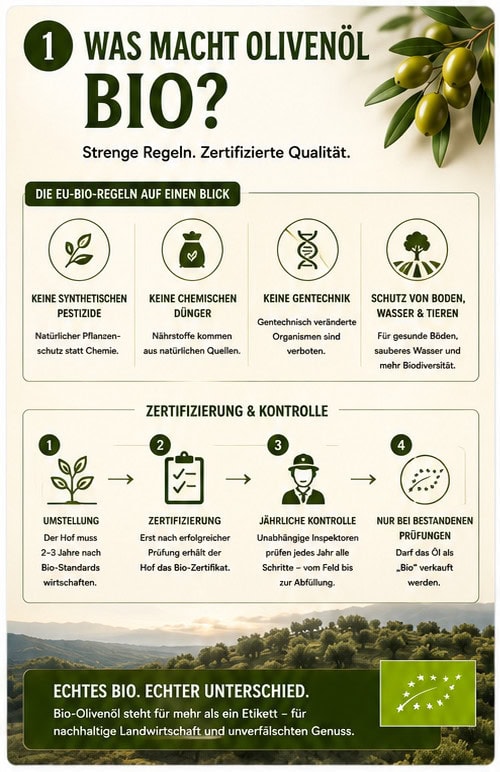
Organic olive oil comes from certified organic farms. That sounds simple. But strict rules sit behind the label.
1.1 EU Organic Rules Explained
Within the EU, one law sets the standard: Regulation (EU) 2018/848. Farmers can’t use man-made pesticides under this law. They can’t use chemical fertilizers either. Genetically modified plants are banned too. Instead, organic farms use natural pest control. They rotate their crops. They use organic fertilizer instead of chemicals. This approach protects the soil. It protects the water too. It also protects the wildlife in the olive groves.
1.2 Certification and Ongoing Checks
A farm can’t get the EU organic seal right away. First, it must farm organically for several years straight. Only then does certification kick in. After that, inspectors check the farm every year. They check every step, from harvest to bottling. Only farms that pass every check can sell their oil as organic olive oil. This tight oversight is what separates real organic oil from empty marketing words.
2. Why Does Organic Olive Oil Cost More?
The higher price comes down to real, practical reasons. It’s not just a fancier label.
2.1 More Manual Labor
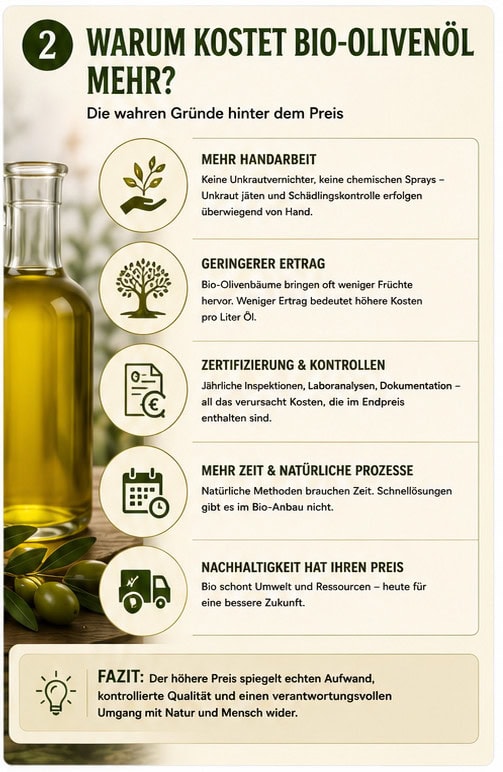
Organic farms can’t spray weeds away with chemicals. Workers pull weeds by hand instead. Pest control also relies on natural methods, not sprays. All of that takes more time. More time means more cost.
2.2 Lower Yield Per Tree
Organic olive trees often produce less fruit than trees on big industrial farms. Less fruit at the same cost pushes the price per liter up.
2.3 Certification Fees
Yearly checks cost money. So does paperwork. So does lab testing. The farm pays for all of it, and that cost ends up in the final price you pay.
3. What Do You Actually Get for the Higher Price?
The extra cost brings real benefits. It’s not just peace of mind.
3.1 More Polyphenols and Antioxidants
Studies show organic olives often contain more polyphenols than regular ones. Here’s one reason why: without chemical spray, trees make more of their own natural defense compounds. Many of those compounds also act as antioxidants in the oil. EFSA, Europe’s food safety authority, sets a clear bar for this. An oil only counts as truly polyphenol-rich once it hits 5 mg of hydroxytyrosol per 20 g. Want extra polyphenols on purpose? Our Polyphena High Polyphenol Olive Oil is made exactly for that.
3.2 No Pesticide Residue
Organic olive oil carries no synthetic pesticide residue. If you’re sensitive to residues, or you simply want to avoid them, this matters a lot.
3.3 Better for Soil and Environment
Organic farming protects the soil over time. It also supports more wildlife in the groves. So buying organic olive oil supports better farming too. Read more in our Organic Farming and Sustainable Olive Farming pages.
4. Organic vs. Regular Olive Oil at a Glance
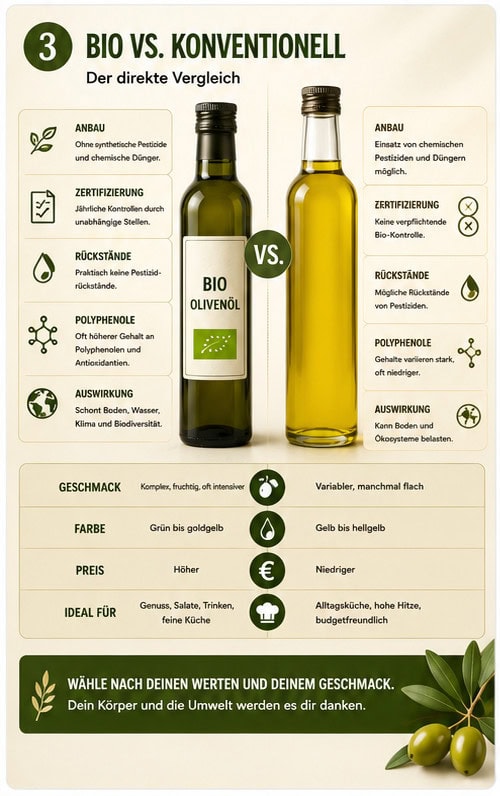
| Feature | Organic Olive Oil | Regular Olive Oil |
| Farming | No man-made pesticides or fertilizers | Chemical sprays allowed |
| Certification | Checked every year by inspectors | No mandatory check |
| Residue | Almost none | Possible pesticide traces |
| Polyphenols | Often higher | Varies more |
| Environment | Gentler on soil and wildlife | Can be more harmful |
| Price | Higher | Lower |
5. Is Organic Olive Oil Really Worth the Money?
There’s no single right answer. But a few facts help you decide.
5.1 More Buyers Choose Organic Each Year
The organic olive oil market keeps growing faster than the regular market. More people pick the organic bottle on purpose, even at a higher price. That trend tells us something. For many buyers, the benefits clearly beat the extra cost.
5.2 When the Extra Cost Pays Off Most
For everyday cooking in large amounts, the price gap really adds up. But for oil you enjoy on its own, say drizzled over salad or fresh bread, the quality shows right away. That’s where flavor and polyphenols matter most.
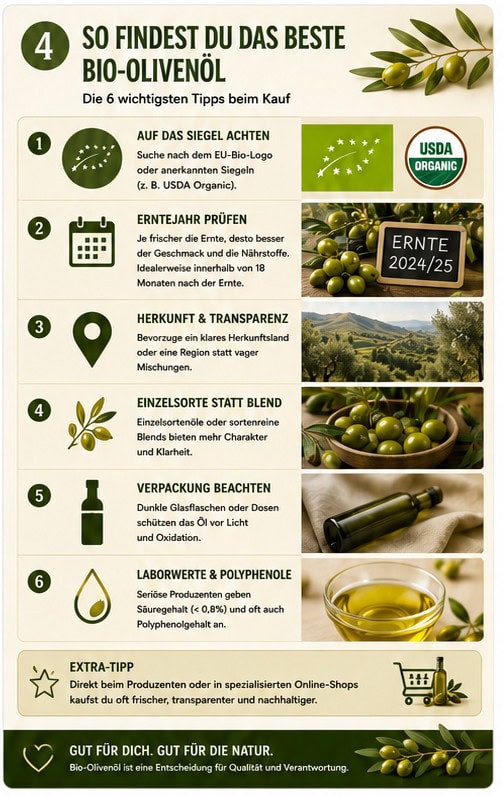
6. How to Spot the Best Organic Olive Oil
6.1 Check the Seal First
Look for the EU organic logo, or a similar mark like USDA Organic. A real seal means an inspector checked the whole process. Vague words on a label don’t.
6.2 Check the Harvest Date and Origin
Fresh olives make better oil. Look for a recent harvest date. Also look for one clear country or region of origin, not a mystery blend from several places.
6.3 Pick Single-Variety Oil Over Blends
The best organic olive oil usually comes from one olive type, or one farm. It’s rarely a big, unclear blend. Our own oils follow this rule closely: Hana, Yara, and Dalia each come from a clear, single source. Want to go even further? Our Heritage Demeter Olive Oil carries biodynamic certification, a step beyond standard organic rules.
Not sure which oil suits you? Try our Olive Oil Finder, or compare our products side by side.
7. The Bottom Line
Organic olive oil costs more for real reasons: harder farming, tighter checks, and lower yields. In return, you get oil with no pesticide residue, often more polyphenols, and a farm that treats the land better. For a special bottle you’ll savor slowly, the extra cost is almost always worth it. Chase the lowest price alone, though, and you’ll rarely land on the best organic olive oil out there.
Want to learn more about olive oil grades, varieties, and origin? Explore our full Olive Oil hub, or browse the store directly.
8. Frequently Asked Questions
Does organic automatically mean extra virgin? No. Organic describes how the farm grows the olives, not the oil’s quality grade. An oil can be organic and still rank as plain virgin, not extra virgin. So check both labels together.
How much more does organic olive oil cost? It depends on the brand, but the gap is usually clear. Harder farming and yearly checks both drive the price up.
Does organic olive oil taste better? Not always. Taste depends mostly on olive type, harvest time, and how the oil gets pressed. Organic farming can boost polyphenols, but it doesn’t guarantee better flavor on its own.
How do I spot a fake organic claim? Look for a real, checked seal, not soft words like “natural” or “pure.” Those words mean nothing on their own and carry no legal weight. For more buying tips, see our full FAQ.

Downloads
Video summary