

Listen to summary
Finding the best olive oil isn’t as simple as reading the front label. Every year, testers put dozens of bottles marked “extra virgin” through lab checks and blind taste panels. The results are humbling. A large share of these oils fail. However, that doesn’t mean they’re fake. In fact, most are just stale. Others were poorly stored, or pressed from lower-grade fruit, then sold under a grade they no longer deserve.
So what actually separates the best olive oil from a bottle that just looks the part? This guide breaks down what testers check. It shows what the test data reveals year after year. And it gives you the criteria to use yourself at the shelf — no lab required.
1. What “Extra Virgin” Legally Requires — and Why Most Oils Still Fail
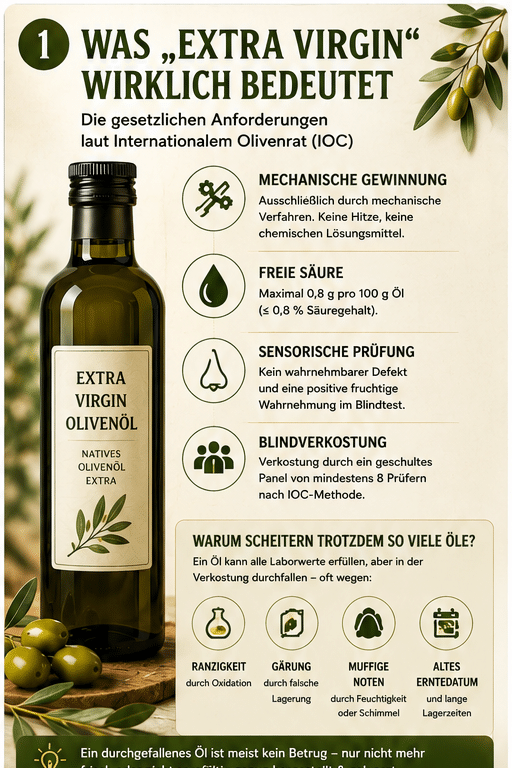
“Extra virgin” is not a marketing flourish. It’s a defined grade. The International Olive Council (IOC) sets that grade for the whole industry. To earn it, an oil must be pressed by mechanical means only. No heat. No chemical solvents. It also needs a free acidity of no more than 0.8 grams per 100 grams. Finally, it must pass a blind taste panel with zero defects and a positive fruity note.
That last test is where most oils fail. An oil can pass every chemical check and still lose its “extra virgin” status. All it takes is one trained taster detecting rancidity, fermentation, or mustiness. Unfortunately, you can’t see these defects on a label. You often can’t taste them until the bottle is open. Because of this, a “failed” oil is almost always still real olive oil. It simply no longer meets the taste bar for the top grade.
2. What Real Olive Oil Tests Actually Measure
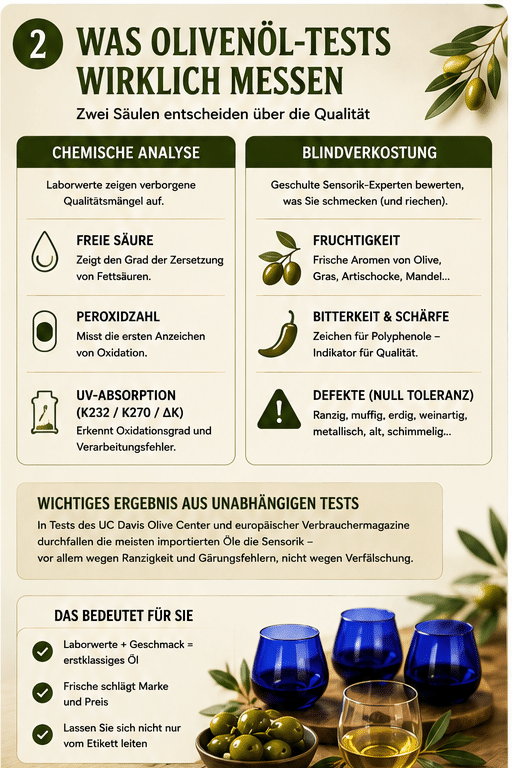
Generally, independent testers combine two very different checks:
Chemical analysis. Labs measure free acidity, peroxide value, and UV absorbance. These numbers reveal oxidation and processing defects.
Blind sensory panels. Trained tasters score fruitiness, bitterness, and pungency. They also flag defects such as rancid, fusty, musty, or winey notes, using the same organoleptic method the IOC uses to certify its own graders.
The UC Davis Olive Center used this exact approach on top-selling imported brands. The result? Most failed sensory standards, mainly due to rancidity and fermentation defects. Adulteration wasn’t the main issue. The oils simply weren’t fresh.
Our companion article covers how the major European consumer magazines run these tests. It also explains what pushes a product into “recommendable” or “inadequate” territory. For the full breakdown, read what olive oil test results really show.
3. What the Test Data Shows, Year After Year
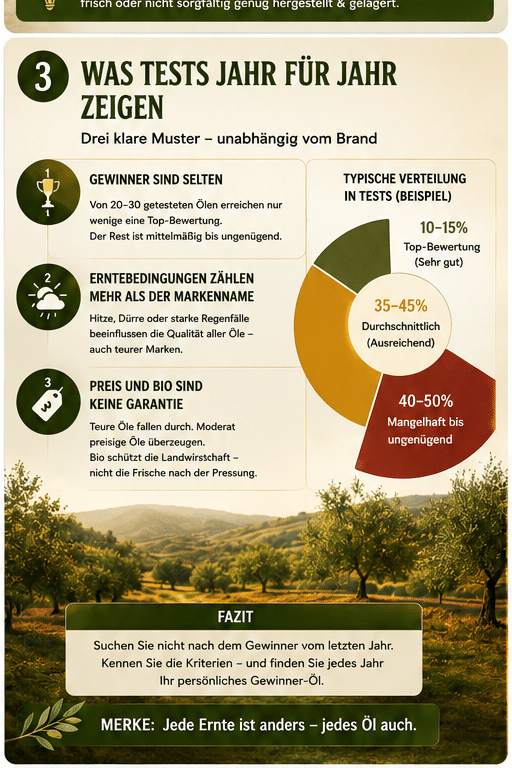
Across repeated testing cycles, three patterns hold up:
Winners are rare, not typical. In most years, only a handful of the two to three dozen oils tested earn a top rating. The rest range from mediocre to disqualified.
Harvest conditions matter more than brand reputation. Heat stress or drought in Mediterranean regions tends to weaken results across the board, no matter the brand.
Price and organic labels don’t guarantee a pass. Expensive oils have failed sensory panels. Some moderately priced oils have scored “very good” instead. Organic certification protects farming practices, not what happens after pressing, so it can’t guarantee freshness either.
Chasing last year’s named winner is a weak strategy. Batches change. Harvests change. Knowing the criteria behind a winning oil works better than memorizing one brand name.
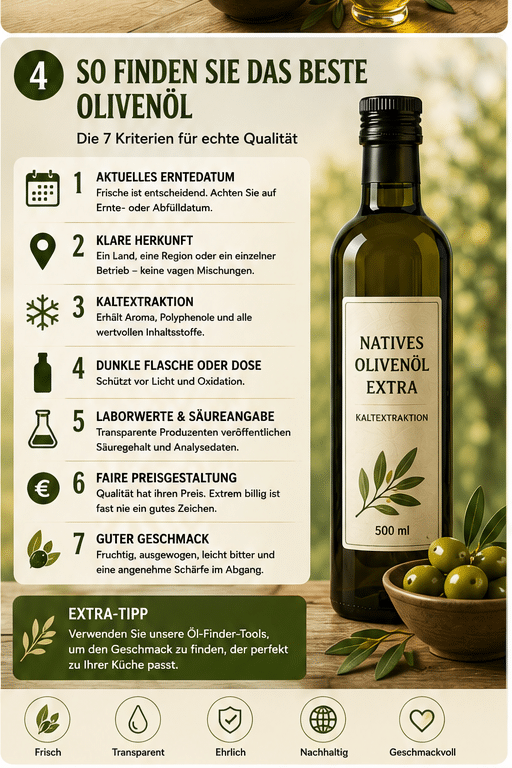
4. What Makes the Best Olive Oil? The Winning Criteria
Once you strip away the brand names, every oil that earns a top score shares the same traits:
A recent harvest date on the label. A best-before date alone can sit 18 to 24 months out, regardless of freshness.
Traceable origin. Look for a named estate, region, or single country, not a vague blend.
Dark glass or opaque packaging, stored away from direct light. Light breaks down the same antioxidants a taste panel scores.
Disclosed acidity or lab data. This signals a producer who actually measures quality, instead of just assuming it.
Pricing that reflects real production cost. Genuine extra virgin oil is labor-intensive to make. A price far below market average is a warning sign, not a bargain.
A clean profile you can verify yourself. Fresh oil smells green, grassy, and fruity. Anything waxy, flat, or reminiscent of old nuts is a defect.
If you’d rather skip the checklist, the Olive Oil Finder runs a short quiz and matches you to a specific bottle automatically.
5. Editor’s Picks: The Best Olive Oil for Every Use
We won’t claim a competitor’s third-party award that doesn’t exist. Instead, we’ll show you how our own range measures up against the exact criteria above, so you can judge it by the same standard you’d apply to anything else on the shelf.
Best mild olive oil for delicate dishes and baking: Hana — Mild Olive Oil. It’s light and low-intensity, so it won’t overpower fish, eggs, or baked goods.
For an everyday all-rounder, try Yara — Balanced Olive Oil. Medium in intensity, it suits daily cooking and dressings.
Prefer bold flavor? Dalia — Intense Olive Oil is robust and peppery. It stands up to strong flavors.
Looking for a no-fuss everyday bottle? Classic — Everyday Olive Oil is reliable and harmonious. It covers standard cooking needs.
If biodynamic farming matters to you, Heritage — Demeter Olive Oil is certified under the strictest biodynamic framework available.
Chasing polyphenols? Polyphena — High-Polyphenol Olive Oil is pressed specifically to concentrate antioxidants.
Additionally, you can compare harvest dates, origin, and flavor profiles side by side using the product comparison tool. Or, check the Olive Oil Food Pairing guide to match a bottle to a specific dish, and browse real buyer feedback on the reviews page.
6. Is the Health Reputation Deserved?
Olive oil’s health reputation rests on more than tradition. The PREDIMED trial followed more than 7,000 people at high cardiovascular risk in Spain. It was published in the New England Journal of Medicine. The finding: a Mediterranean diet with extra virgin olive oil lowered the combined rate of heart attack, stroke, and cardiovascular death, compared with a standard low-fat diet.
Scientists generally credit two things for this effect: monounsaturated fat and polyphenols. Fresh, minimally processed extra virgin oil concentrates both. Refined “olive oil” and oxidized oil lose most of them. So freshness matters beyond flavor. A rancid or refined oil won’t deliver the same nutrition as a genuinely fresh one, even from an identical-looking bottle.
7. Where to Buy: Retail vs. Specialist vs. Direct
Supermarkets offer convenience and competitive pricing. However, shelf turnover and lighting vary a lot. A bottle that was excellent at bottling can sit under fluorescent light for months before it reaches your cart.
Specialist shops and delis tend to curate more carefully. Staff can often tell you the harvest year and origin on request. Still, selection is narrower and prices run higher.
Buying direct from the producer online usually gives the clearest view of harvest date and handling. That’s because it skips extended warehouse and retail shelf time. If you’d prefer to see and taste before buying, the store locator shows nearby physical retail points. Otherwise, browse the full range through the online store — including smaller samples to try before committing.
8. Storing Olive Oil So It Doesn’t Lose the Test
Buying a winner is only half the job. Poor storage can undo it within weeks. Watch for three enemies: light, heat, and air.
Store bottles away from direct sunlight and bright store lighting.
Keep the oil cool, not cold. A stable room temperature away from the stove works best. The fridge isn’t necessary, and it can cloud the oil.
Limit air exposure once you open a bottle. A pouring spout helps. So does decanting into a smaller, well-sealed refillable bottle for daily use.
Use opened oil within six to eight weeks for full flavor. Smaller bottles bought more often beat one large tin sitting half-used for a year.
9. Frequently Asked Questions
Which olive oil wins the test every year? There’s no fixed answer, because testing organizations don’t always test the same brands twice, and results shift with harvest conditions and batch quality. So, checking the winning criteria yourself works better than chasing a specific product name from a previous year.
Why does an oil fail the test despite an “extra virgin” label? Because the grade requires a flawless sensory profile, not just correct chemistry. Therefore, a single defect — rancid, musty, fusty — is enough to disqualify an oil from the top grade, even without any adulteration.
Is a more expensive bottle automatically a safer bet? No. In fact, testing has repeatedly shown expensive oils failing sensory panels while moderately priced oils pass. So, price reflects production cost and origin more than it guarantees an outcome.
Does organic certification guarantee the best olive oil? No, because organic certification confirms farming practices, not what happens after pressing. An organic oil can still turn rancid or pick up defects during processing, transport, or storage.
Can I cook with extra virgin olive oil, or is it only for raw use? Yes, you can cook with it. Extra virgin olive oil generally has a smoke point around 190–210°C (374–410°F), which covers most everyday cooking and pan-frying. However, it’s best to save very high-polyphenol or delicate finishing oils for raw use, where their flavor stands out most.
10. Conclusion
The best olive oil isn’t one fixed product. It’s a set of traits: a recent harvest date, a traceable origin, protective packaging, honest pricing, and a clean sensory profile. Check for those, and you’ll buy better — no matter which bottle currently tops a magazine’s list.
Want that matching done for you? Try the Olive Oil Finder for a personalized recommendation, or browse the full range directly.

Downloads
Video summary