



Listen to summary
Fake olive oil is one of the most common food frauds in the world. Studies have repeatedly found that many bottles labeled “extra virgin” do not meet that standard at all. Some are old, rancid oil. Some are blends with cheaper oils. And some have very little real olive content at all. So if you are buying original olive oil, you need to know how to check what is actually inside the bottle.
In this guide, we will walk through every method for detecting fake olive oil. We will cover label checks, sensory tests, packaging red flags, and lab markers. And we will also show what original olive oil looks like, so you always have something real to compare against.

How Widespread Is Olive Oil Fraud?
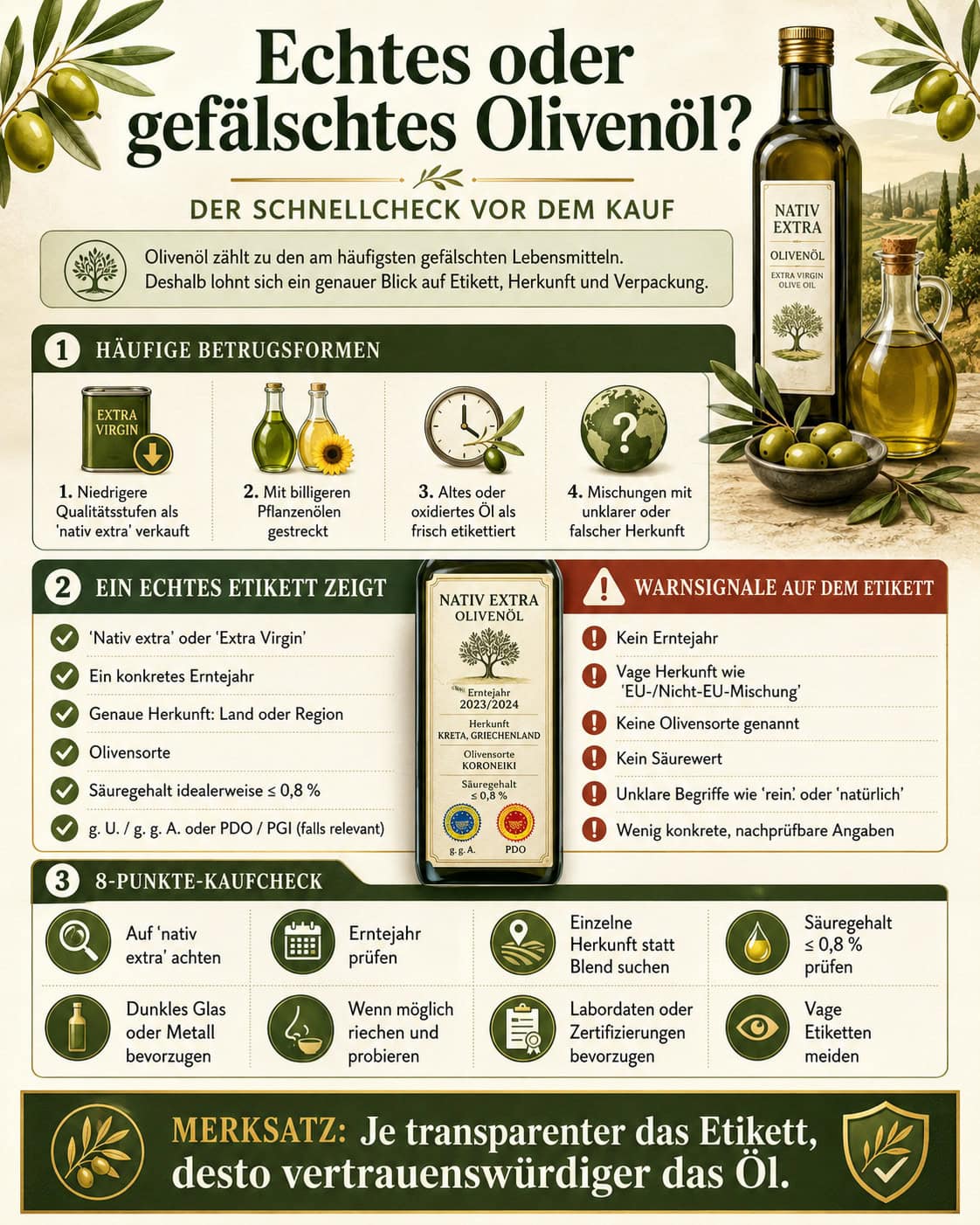
Olive oil fraud is, in fact, older than most people think. It has been documented by the International Olive Council for decades. The most common types of fraud include:
- Mislabeling lower grades as extra virgin
- Blending real olive oil with cheaper seed oils
- Selling old, oxidized oil under a fresh label
- Mixing oils from several countries and labeling one as the source
So a bottle that says “extra virgin” is not, in other words, automatically trustworthy. The label is a claim. And like any claim, it can be false.
Why It Is So Hard to Spot
Most fake oil looks, and sometimes even smells, similar to real oil. In fact, the differences are often too small to catch without testing. That is why knowing the specific signs matters so much. But, above all, it is also why buying from a traceable producer is the safest route.
How to Detect Fake Olive Oil on the Label
The label is, in fact, your first line of defence. A genuine original olive oil gives you specific, verifiable information. A fake one, by contrast, keeps things vague.
What a Real Label Shows
Look for these signs specifically:
- The words “extra virgin” or “Nativ Extra” — not just “olive oil” or “pure olive oil”
- A specific harvest year, not just a “best before” date
- A named single country or region of origin
- A named olive variety
- An acidity level, ideally at or below 0.8%
- A PDO or PGI mark, where relevant
What a Fake Label Hides
Fake or low-quality oil, on the other hand, tends to do the opposite. So watch out for:
- No harvest year at all
- Vague origin like “EU & Non-EU blend”
- No olive variety listed
- No acidity stated
- Vague terms like “natural” or “pure” with no grade
The less a label tells you, the more you should question it. After all, honest producers are proud to share this information.
How to Detect Fake Olive Oil by Smell and Taste
Your senses are, in fact, powerful tools. And they are free. So use them.
What Original Olive Oil Smells and Tastes Like
Original olive oil has a distinct character. It smells fresh. It can also smell grassy, fruity, or herbal. On the palate, moreover, it tastes slightly bitter. And it has a peppery kick at the back of the throat. That kick, in fact, signals high polyphenols. And polyphenols are the clearest marker of genuine, fresh oil.
To taste properly, pour a small amount into a cup. Warm it in your hands. Then taste it alone, without bread or food. A real oil will, therefore, tell you something clear.
Warning Signs to Taste and Smell
Fake or degraded oil, by contrast, shows these faults:
- Rancid, like old wax or crayons
- Flat and greasy with no character
- Musty or moldy
- Stale and lifeless
- No aroma at all
If the oil has any of these faults, do not trust the label. In short, your nose and tongue are more honest than the bottle.
How to Detect Fake Olive Oil by Packaging
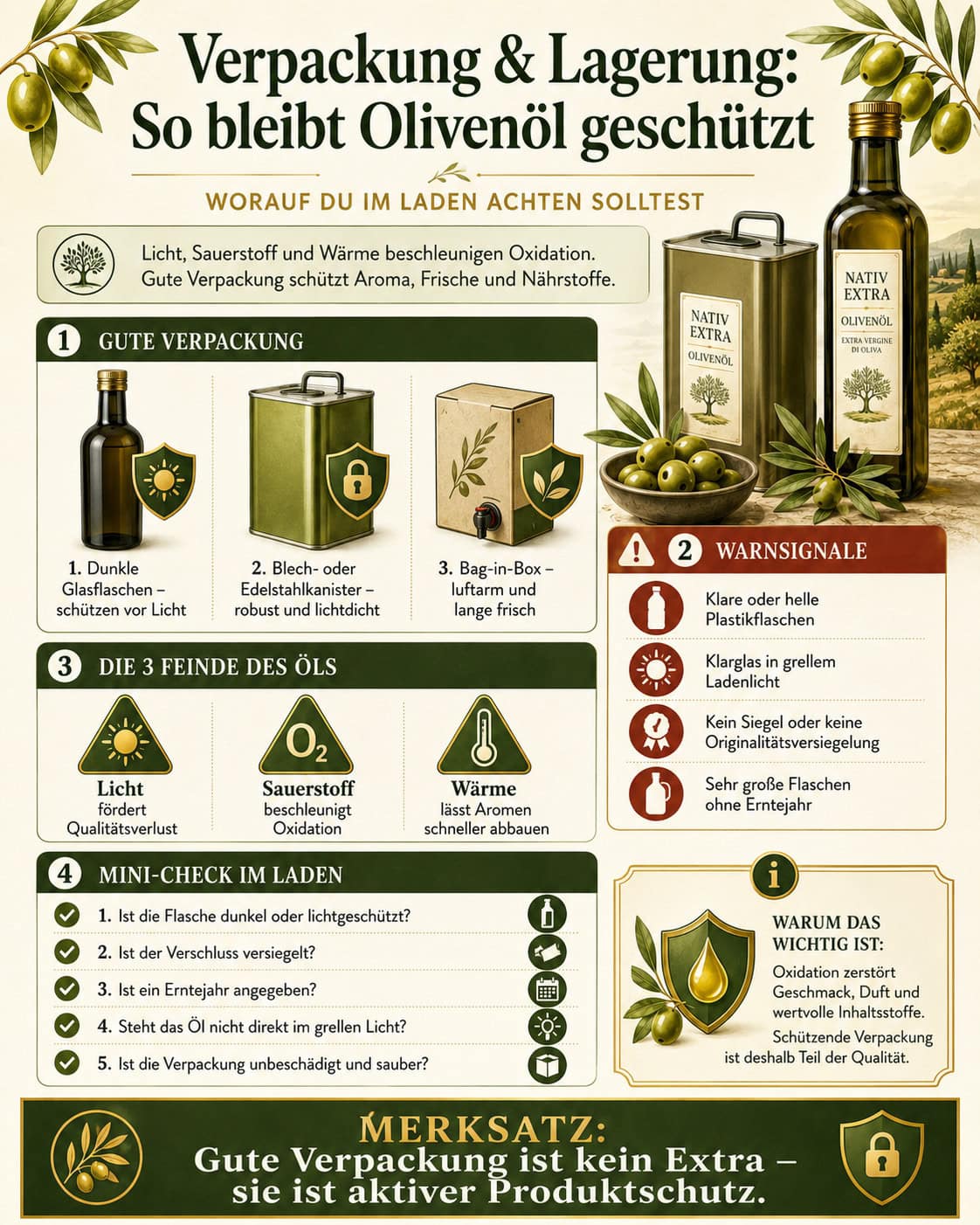
Packaging, in fact, tells its own story. And it is often overlooked.
Signs of Genuine Packaging
Original olive oil is usually sold in:
- Dark glass bottles, which block light
- Steel tins or canisters
- Bag-in-box formats with airtight seals
Light, after all, is one of the biggest enemies of olive oil. It speeds up oxidation. And oxidation, in turn, destroys flavor and nutrition. So a producer who cares about quality, therefore, always uses protective packaging.
Packaging Red Flags
By contrast, watch out for:
- Clear or lightly tinted plastic bottles
- Clear glass left in a brightly lit store
- No seal or tamper protection
- Very large bottles with no harvest date
Iline Organic, for example, ships its original olive oil in dark glass, bag-in-box, and steel formats. That is, in fact, a deliberate choice to protect quality from press to table.
Lab Tests: The Only Full Proof
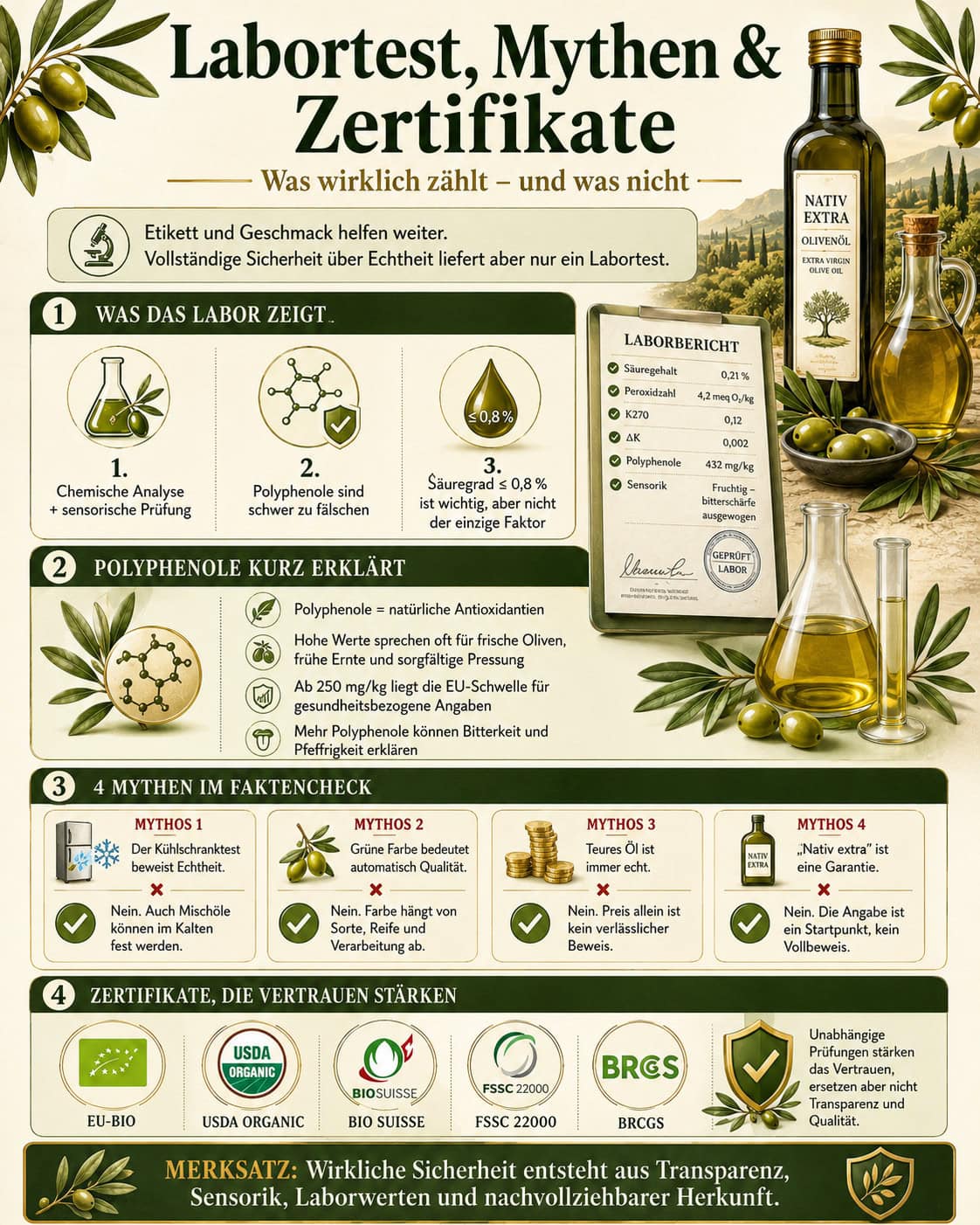
Label checks and sensory tests are useful. But, above all, only a lab test fully proves authenticity. So it is worth knowing what labs actually check.
Key Lab Markers for Original Olive Oil
| Test | What it shows | Extra virgin limit |
| Free acidity | Freshness and damage level | At or below 0.8% |
| Peroxide value | Oxidation level | At or below 20 mEq O₂/kg |
| K232 / K270 | Oxidation products | At or below 2.50 / 0.22 |
| Polyphenols | Antioxidant level | 250 mg/kg or more |
What High Polyphenols Tell You
A high polyphenol count is, in fact, one of the hardest things to fake. It requires fresh olives, early harvest, and careful cold pressing. As a result, it is a strong signal of original olive oil. Iline Organic’s Polyphena, for instance, reaches up to 1,200 mg/kg. That is well above the EU’s 250 mg/kg health-claim threshold. And it is, therefore, a level that takes genuine skill and care to achieve.
What Genuine Original Olive Oil Looks Like
The easiest way to avoid fake oil is to choose a producer who controls the full process. Iline Organic, for instance, grows, presses, and bottles its original olive oil directly on its own Tunisian groves. There are no middlemen. And there is no relabeling. So what is on the label is exactly what is in the bottle.
Certifications You Can Check Yourself
Iline Organic carries outside certifications. So you do not have to take their word for it. Each one can be verified directly:
- EU Organic farming certification
- USDA Organic
- Bio Suisse
- FSSC 22000 food safety standard
- BRCGS global food safety standard
Together, these confirm that an outside body has checked the farming, the pressing, and the food safety. It is not, in other words, just a claim on the front of a bottle.
Common Myths About Detecting Fake Olive Oil
Myths About Tests
Myth 1: “The fridge test proves real oil.” False. Placing oil in the fridge may change its texture. However, it is not a reliable test at all. Both genuine and fake oils can turn solid in the cold. That depends, instead, on the fat profile, not authenticity. So only a lab test actually proves quality.
Myth 2: “Green color means genuine oil.” False, too. Color depends on olive variety, ripeness, and processing. It is, therefore, not a sign of authenticity. And it is, above all, no way to tell original olive oil from a blend.
Myths About Price and Labels
Myth 3: “Expensive oil is always real.” False. A high price does not guarantee authentic original olive oil. In fact, some of the most adulterated oils carry premium price tags. So price alone, therefore, tells you nothing. Always check the label and taste the oil.
Myth 4: “All extra virgin oil is original olive oil.” False. Extra virgin is a grade. But not every bottle that claims it actually meets the standard. In fact, many do not pass the chemical or sensory tests required. So treat the label as a starting point, not a guarantee.
Your Checklist for Spotting Fake vs. Original Olive Oil
So, to sum up, here are the key checks to run before you buy:
- Look for “extra virgin” or “Nativ Extra” on the label
- Check for a specific harvest year
- Find a named single origin, not a blend
- Look for an acidity level of 0.8% or lower
- Choose dark glass or steel packaging
- Smell and taste the oil if you can
- Prefer producers who publish lab results or carry outside certification
- Avoid vague labels with no harvest date or origin detail
If you want original olive oil you can verify from source to bottle, Iline Organic is built around exactly that. Every batch carries full certification. And you can find a stockist near you to try it before committing to a larger order.
FAQ — Frequently Asked Questions
About Spotting Fake Oil
What is original olive oil? Original olive oil is genuine, traceable oil. It has not been blended, diluted, or relabeled. A named origin, a harvest year, and a known producer are, in fact, the clearest signs.
How can I tell if olive oil is fake? Check the label for vague or missing information. Then smell and taste it. Flat, greasy, or rancid notes are warning signs. And above all, prefer producers who are open about their source and testing.
Is extra virgin olive oil always authentic? No. Extra virgin is a quality class. But it is not, therefore, proof that the oil inside is genuine. So always go beyond the front label. Check origin, harvest year, and sensory quality.
About Testing and Quality
Can I test olive oil at home? You can use smell and taste checks at home. However, only a lab can fully verify authenticity. So if you want real certainty, look for producers who share their own lab data.
What polyphenol level signals genuine oil? A level of 250 mg/kg or more is the EU’s own health-claim threshold. Premium original olive oil often goes much higher. Iline Organic’s Polyphena, for instance, reaches up to 1,200 mg/kg.
Does dark packaging really matter? Yes. Dark glass or steel blocks light. And since light speeds up oxidation, dark packaging, therefore, keeps the oil fresher for longer. Clear bottles are a warning sign, not just a style choice.
Is cheap olive oil always fake? No. Some low-cost oils are very good. Meanwhile, some expensive ones are not. Price alone, in fact, tells you nothing. Instead, focus on origin, harvest year, and sensory quality above all.

Video summary